Tracking Cross-Border Data Movements in Skill-Based Gaming Networks Spanning Regulated Gambling Areas
Ulrich Albrecht · Sep 28, 2026
Tracking Cross-Border Data Movements in Skill-Based Gaming Networks Spanning Regulated Gambling Areas
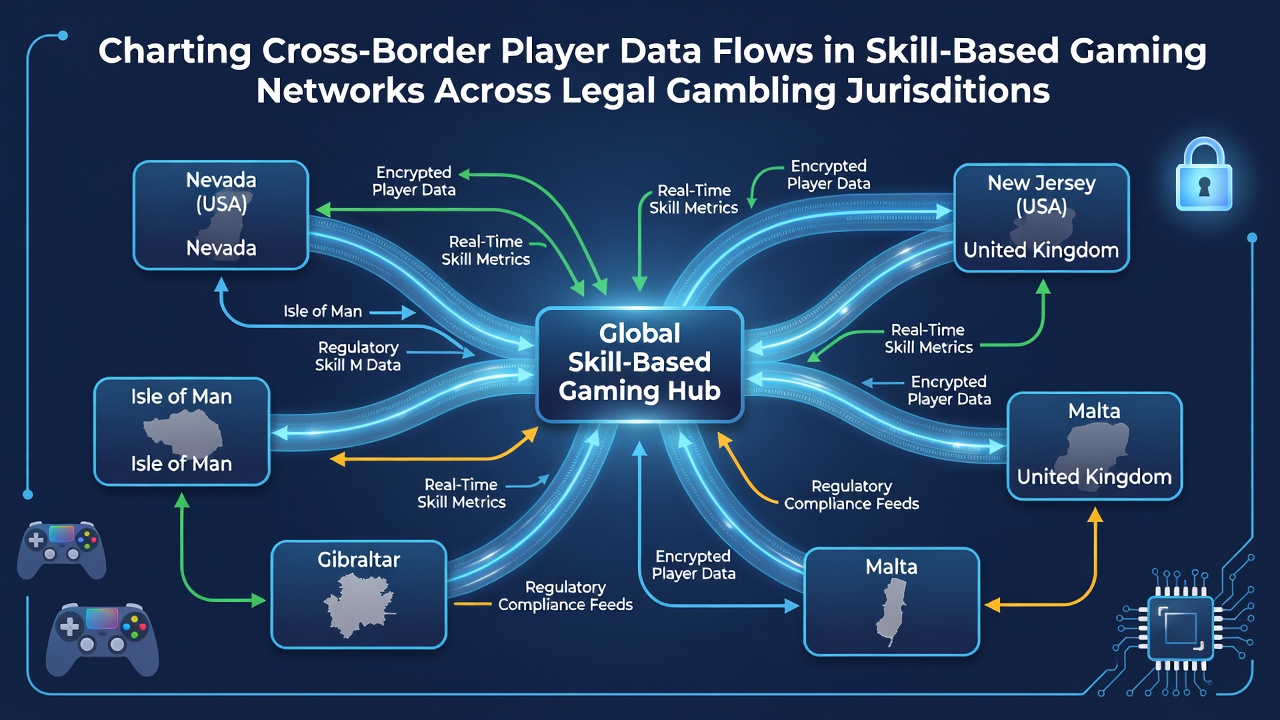
Skill-based gaming networks now operate across multiple legal gambling jurisdictions where player data must move in compliance with varying national and regional rules, and operators track these transfers through detailed mapping systems that record each data packet's origin, destination, and purpose. Research from regulatory bodies shows that platforms handling poker, daily fantasy sports, and other skill-influenced games collect extensive user profiles including location, transaction history, and performance metrics, then route portions of this information to servers in different countries to support live gameplay and regulatory reporting.
Core Mechanisms Driving Data Exchanges
Operators use secure APIs and encrypted tunnels to send player verification details from one jurisdiction to another while maintaining audit trails that satisfy local data protection statutes, and this process becomes essential when a user in one state joins a tournament hosted on servers located elsewhere. Data indicates that real-time skill assessments often require cross-referencing performance against global leaderboards, which means partial datasets travel between facilities in places like New Jersey, Ontario, and parts of the European Union without triggering full data localization requirements in every case.
Regulatory Structures Shaping Transfers
Legal frameworks in the United States emphasize state-level oversight where each gaming commission sets its own standards for data handling, while the European approach relies on adequacy decisions that permit flows only to jurisdictions meeting specific protection thresholds. Observers note that September 2026 brought updated guidance from several bodies requiring operators to log every cross-border transmission of skill-game analytics, including the algorithms that determine payout eligibility based on player expertise rather than chance alone. Those who manage multi-jurisdictional platforms often discover that aligning these rules demands separate consent mechanisms for users in different regions, because one jurisdiction may allow aggregated performance data to leave its borders whereas another insists on on-site storage for at least five years.
Technical Infrastructure Supporting Compliance
Companies deploy specialized software that classifies data elements by sensitivity before routing them, and this classification allows non-personal gameplay statistics to travel more freely than personally identifiable information tied to account funding or identity verification. Figures from industry reports reveal that encryption standards have tightened since 2024, with many networks now requiring end-to-end protection for every packet that crosses an international line, especially when skill-based results feed into bonus calculations or tournament seeding. There's this case where experts found that latency issues arise when data must detour through approved intermediary nodes, yet operators have adapted by building regional hubs that cache non-sensitive information locally while still feeding central systems with anonymized aggregates.
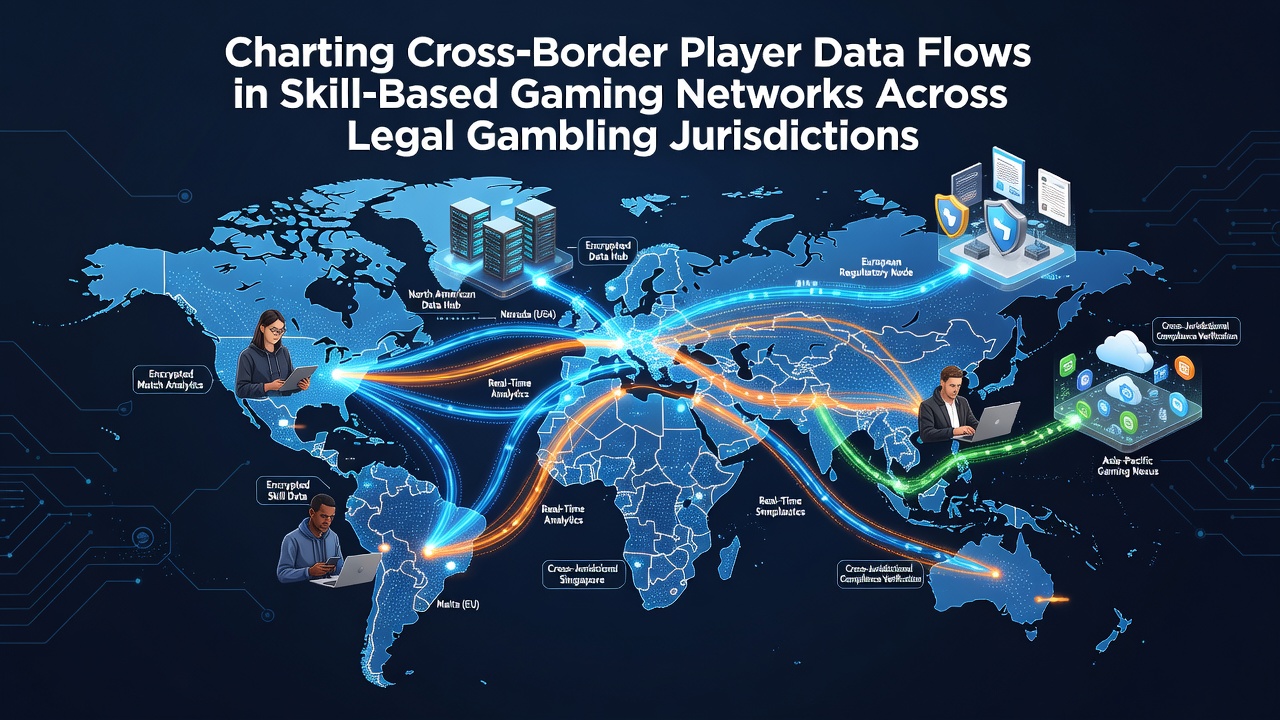
What's interesting is how these hubs reduce overall transfer volumes while preserving the ability to reconstruct full player histories for dispute resolution or tax reporting. Researchers discovered that blockchain-based ledgers sometimes supplement traditional databases, creating immutable records of data movements that auditors can review without exposing raw personal details during routine checks.
Practical Challenges in Multi-Jurisdictional Operations
Skill-based networks face unique pressures because gameplay data directly influences financial outcomes, which means any mismatch in how different regulators define "personal data" can halt transfers mid-session. Take one researcher who noticed that certain platforms now segment user accounts by jurisdiction at the database level, allowing seamless handoffs only when all involved authorities have pre-approved the data categories involved. Data shows that September 2026 saw increased collaboration between North American and Asian regulators on standardizing formats for skill-game telemetry, reducing the need for custom adapters that previously slowed cross-border synchronization. Those who've studied this know that smaller operators sometimes struggle with the cost of maintaining parallel compliance teams, whereas larger groups leverage centralized data governance offices that coordinate with bodies such as the Alcohol and Gaming Commission of Ontario and the Australian Communications and Media Authority.
According to findings published through academic channels, the volume of cross-border skill-gaming data doubled between 2023 and 2025 as more jurisdictions legalized interactive formats, and this growth forced vendors to develop new tools for consent management that travel with the user profile rather than remaining fixed to one server location.
Conclusion
Mapping these flows requires ongoing attention to evolving statutes and technical standards, because skill-based gaming continues to expand into additional licensed markets where data movement underpins both player experience and regulatory oversight. Operators that maintain clear documentation of every transfer path stay better positioned to adapt when new jurisdictions introduce fresh requirements or when existing adequacy agreements shift. The infrastructure supporting these networks grows more sophisticated each year, driven by the need to balance operational efficiency with strict adherence to location-specific rules governing player information.