The Hidden Mechanics Linking State Compact Renewals to Evolving Slot Network Payout Algorithms
Olivia Jung · Nov 23, 2026

The Hidden Mechanics Linking State Compact Renewals to Evolving Slot Network Payout Algorithms
State compact renewals serve as the primary framework through which tribal governments and state regulators renegotiate terms for casino operations, and these periodic updates frequently embed clauses that govern technological standards for gaming equipment including slot networks. Observers note that such provisions often require upgrades to centralized systems where payout algorithms operate in real time across multiple properties. Data from regulatory filings shows that when compacts come up for renewal, tribes must align their slot operations with new revenue-sharing formulas while also adopting enhanced reporting protocols that feed directly into algorithm calibration processes.
Compact Renewal Cycles and Their Regulatory Reach
Renewal negotiations typically unfold every five to ten years depending on the jurisdiction, and these discussions cover everything from exclusivity agreements to infrastructure investments that extend to slot network maintenance. Researchers have tracked how states leverage these moments to introduce requirements for interoperability standards, which means slot manufacturers must adjust payout algorithms to accommodate cross-property data sharing mandates. Figures reveal that in states with multiple tribal compacts, coordinated renewals create ripple effects that standardize certain algorithmic parameters nationwide within those networks.
Take one case in the Southwest where a 2024 renewal introduced mandatory participation in a shared progressive jackpot pool, and this forced immediate recalibration of base game payout percentages to maintain overall return-to-player ratios. Those who've studied the process know that compact language on responsible gaming often translates into coding requirements that cap bonus round frequencies or adjust volatility settings in the underlying algorithms.
Slot Network Architecture Under Evolving Rules
Modern slot networks function through central servers that monitor every spin and adjust payout distributions based on aggregated play data, and compact renewals increasingly specify how this data must be transmitted to state oversight bodies. According to National Indian Gaming Commission documentation, tribes operating under renewed agreements must implement audit trails that expose algorithm decision trees to third-party verification. This level of transparency influences how developers design random number generators and bonus allocation logic to withstand regulatory scrutiny during renewal reviews.
What's interesting is the way revenue allocation formulas in compacts interact with network-level payout controls, because states often tie their share of winnings to specific performance metrics tracked by the same systems. In November 2026 several Midwestern compacts reached renewal deadlines, and early filings indicate new clauses requiring dynamic payout adjustments tied to statewide player loss limits, a development that directly modifies how algorithms distribute wins across connected machines.
Technical Linkages Between Policy and Code
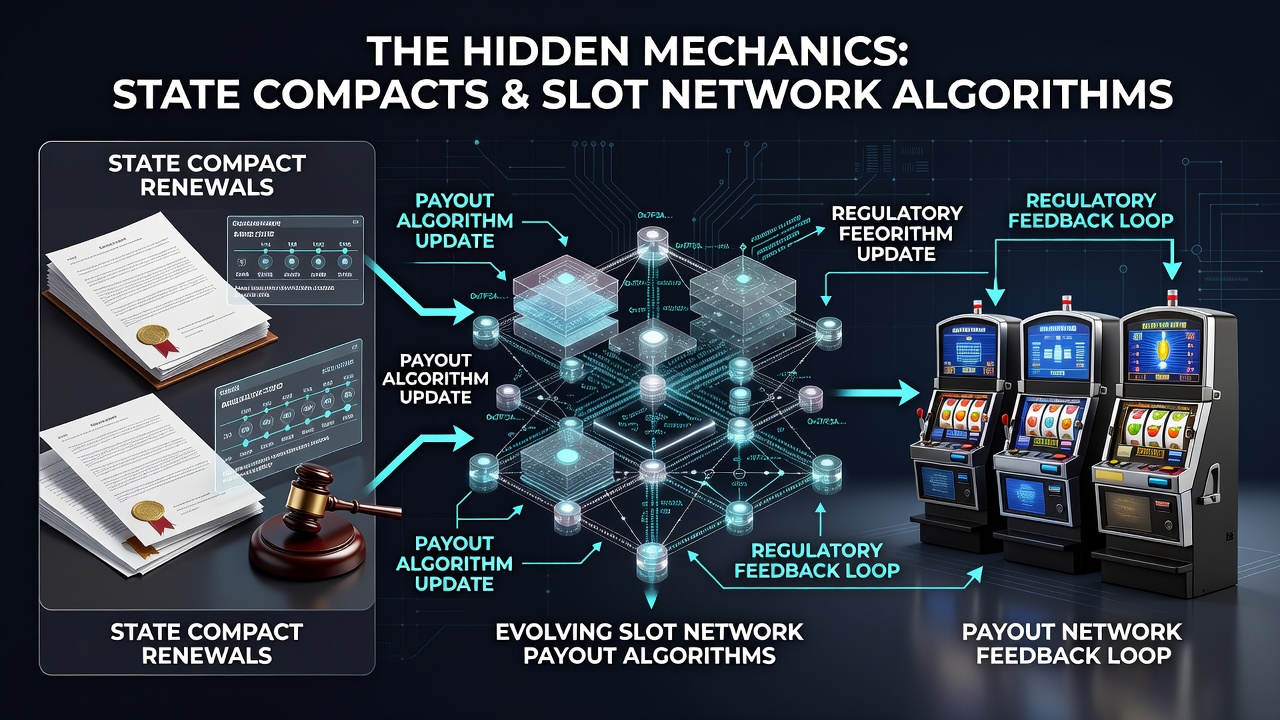
Algorithm updates rarely happen in isolation from compact terms, since many agreements now mandate that any change to payout percentages or feature frequencies receives pre-approval from both tribal and state authorities. Experts have observed that this creates a feedback loop where regulatory feedback shapes the mathematical models used in the software, particularly around how progressive contributions accumulate and distribute. Studies from academic gaming research centers show measurable shifts in hit frequency patterns following major compact renewals, especially when new reporting standards force more granular logging of player behavior data.
Yet the mechanics go deeper because compact-mandated security protocols often require encrypted data streams between slot machines and central servers, and these same streams carry the commands that tweak payout algorithms in response to live performance thresholds. Industry reports indicate that manufacturers have begun embedding modular code structures specifically designed for rapid compliance updates during renewal cycles, allowing networks to recalibrate without full system overhauls.
Regional Variations and Standardization Pressures
Different regions approach these linkages with varying degrees of stringency, whereas some states focus on revenue transparency others emphasize consumer protection metrics that translate into volatility caps within the algorithms themselves. One study revealed that multi-state operators face the added challenge of maintaining separate algorithm versions to satisfy divergent compact requirements across jurisdictions. Data shows that synchronization efforts between these versions create additional layers of testing and validation that extend project timelines for network upgrades.
But here's the thing: when a single manufacturer supplies equipment to properties in multiple states, compact renewal outcomes in one location can indirectly influence payout settings in another through shared software platforms. Researchers discovered this pattern while analyzing post-renewal performance data from properties that share backend infrastructure, and the findings highlight how policy changes propagate through technical systems faster than many anticipated.
Conclusion
The connections between state compact renewals and slot network payout algorithms operate through a combination of contractual language, regulatory mandates, and technical implementation requirements that continue to evolve. As more agreements incorporate provisions for data sharing and performance monitoring, the influence on algorithmic design grows more pronounced. Those tracking the industry note that future renewal cycles will likely introduce even tighter integration between policy objectives and the code governing slot outcomes, creating an increasingly unified regulatory and technical environment across jurisdictions.